Free Museums in Los Angeles
Los Angeles is one of the best cities in the United States for free museums, with world-class institutions that never charge a dime alongside smaller galleries tucked into unexpected corners. From contemporary art in Downtown to sweeping hilltop collections in Brentwood, free museums in Los Angeles cover everything from science and space exploration to muralism, street art, and cutting-edge video installations. Whether you are visiting for a long weekend or live here year-round, there is always something new to see without spending on admission.
Overview
Our directory lists 11 free museums across Los Angeles, spanning contemporary art, science, history, and cultural heritage. The city’s free offerings cluster in a few key zones: Downtown LA (DTLA) around Grand Avenue and the Arts District, the Westside corridor stretching from Mid-Wilshire through Westwood to Brentwood, and pockets in Exposition Park near USC. Because LA is a driving city, distances between clusters can be significant, but the Metro system and well-timed visits make it possible to hit multiple free museums in a single day.
Types of institutions include major encyclopedic collections, university-affiliated galleries, civic art spaces, a hands-on science center, and niche interpretive sites. Many of LA’s free galleries also host rotating exhibitions, meaning repeat visits are always rewarded with fresh work.
Top Always-Free Picks
-
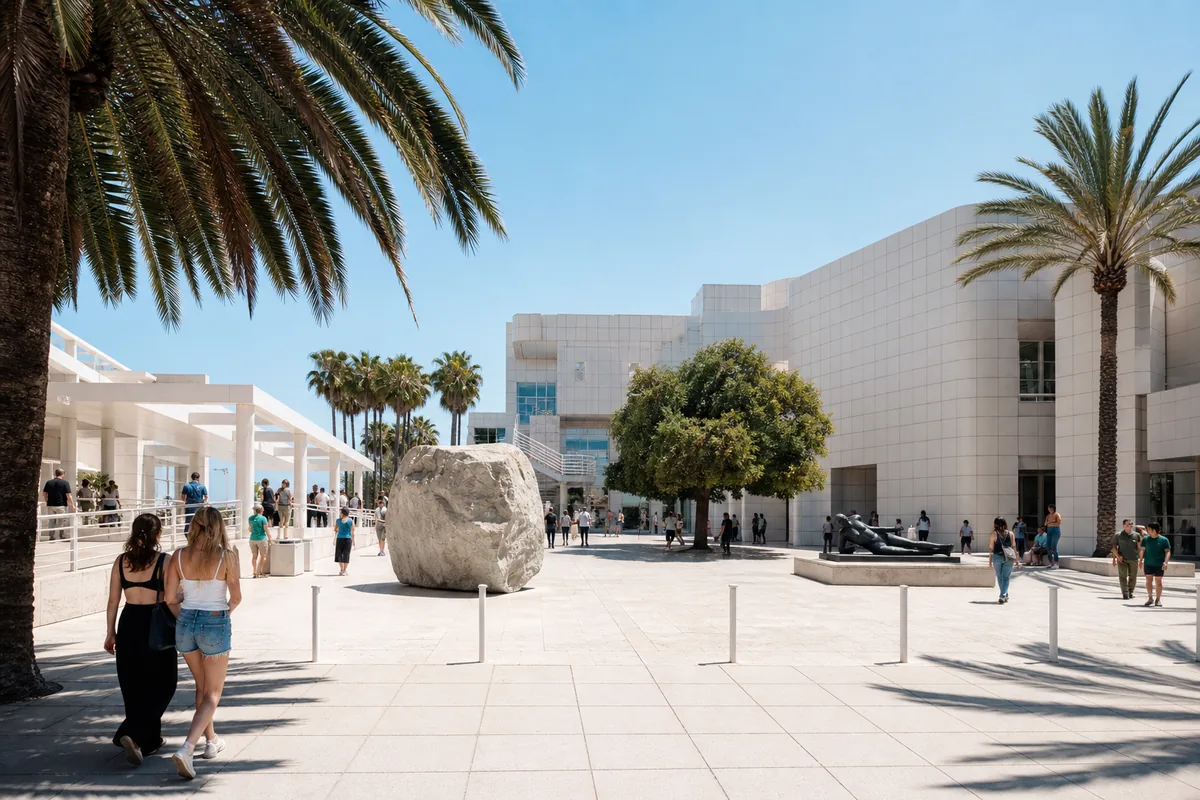
The J. Paul Getty Museum — Perched atop the Brentwood hills, the Getty Center houses an extraordinary collection of European paintings, drawings, sculpture, and decorative arts alongside a rotating photography program. The architecture by Richard Meier is a destination in itself, and the manicured Central Garden offers one of the best free views in the city. Parking requires a reservation and costs $20, but admission is always free.
-
The Broad Museum — Located on Grand Avenue in DTLA, The Broad is home to over 2,000 works of postwar and contemporary art, including signature pieces by Jeff Koons, Jean-Michel Basquiat, Cindy Sherman, and Yayoi Kusama. The building’s honeycomb-like “veil and vault” exterior has become an architectural icon. General admission is free, though special exhibitions and the Infinity Mirror Rooms require separate timed tickets.
-
Hammer Museum — Run by UCLA in Westwood, the Hammer focuses on contemporary art with a social conscience. Exhibitions rotate frequently and tend toward the thought-provoking, with past shows spanning feminist art, LA-based painters, and global video art. The courtyard cafe and free public programs, including lectures and film screenings, make this a neighborhood anchor.
-
California Science Center — Sitting in Exposition Park, the California Science Center offers free entry to its permanent galleries covering ecosystems, creative invention, and the human body. The star attraction is the Space Shuttle Endeavour, displayed in a purpose-built pavilion. Temporary exhibitions and IMAX films carry a fee, but the core science halls are always free, making this a top pick for families.
-
Museum of Contemporary Art (MOCA) — MOCA’s Grand Avenue location in DTLA features a permanent collection strong in Abstract Expressionism, Pop, Minimalism, and contemporary installation. Free general admission was introduced in 2020, opening one of LA’s most important art institutions to everyone. Check for special exhibition surcharges, but the permanent collection galleries and many rotating shows are included at no cost.
-
Gallery at REDCAT — Tucked inside the Roy and Edna Disney CalArts Theater in the Walt Disney Concert Hall complex, REDCAT stages some of the most experimental visual art and performance in the city. Shows change regularly and lean toward multimedia installations, interdisciplinary work, and emerging artists from CalArts and beyond. The intimate gallery space is always free to visit.
-
Los Angeles Municipal Art Gallery — Located inside Barnsdall Art Park in East Hollywood, this city-run gallery presents exhibitions by LA-based artists in a hillside setting designed by Frank Lloyd Wright. The surrounding park, which includes the Hollyhock House, provides panoramic views of Hollywood and the Griffith Observatory. The gallery itself is free, though Hollyhock House tours require a ticket.
-
Hammer Museum and the Los Angeles Municipal Art Gallery both represent the city’s commitment to free public access to art, but they serve different audiences and aesthetics, making both worth a visit.
-
America Tropical Interpretive Center — On Olvera Street in the oldest part of Downtown, this small center tells the story of David Alfaro Siqueiros’s controversial 1932 mural “America Tropical,” which was whitewashed for decades before being painstakingly conserved. Visitors can view the mural from a rooftop terrace and explore exhibits on LA’s muralist tradition and Mexican-American heritage. Free admission and a powerful historical narrative make this a must-see stop.
-
Old machinery exhibit — A more offbeat entry on the list, this open-air display of vintage industrial machinery offers a quirky window into LA’s manufacturing and agricultural past. It is a quick stop rather than a full museum visit, but worth a look if you are already exploring the surrounding area.
-
Musee de la justice — This small, specialized museum focuses on the history and philosophy of justice systems. Its collection includes historical documents, artifacts, and interpretive panels that trace legal history across cultures. Free entry makes it an easy addition to a broader museum day.
Best Free Days and Seasons
Most of LA’s major free museums are open year-round, but timing your visit wisely can make a real difference in crowd levels.
Best months: January through March and September through November tend to be the least crowded periods. Summer brings school groups and tourists, while December holiday weeks spike attendance at The Broad and the Getty in particular.
Best days of the week: Tuesday through Thursday mornings are consistently the quietest. The Broad and the Getty see their heaviest crowds on weekends, especially Saturdays. If you can only visit on a weekend, arrive right at opening or in the last two hours before closing.
Seasonal tips: LA’s mild winters mean that outdoor components like the Getty Center Garden or Barnsdall Art Park are pleasant virtually any time of year. Summer heat (especially in the San Fernando Valley and inland areas) makes air-conditioned museums a welcome retreat. June mornings often start with coastal fog (“June Gloom”), which burns off by noon and keeps the Westside comfortably cool for walking.
Free-day specials: While the museums listed here are always free, other paid LA institutions occasionally offer free days. LACMA, for example, has offered free admission on select holidays. Keep an eye on individual museum calendars for bonus opportunities.
Walking Routes and Clusters
Because Los Angeles is spread out, think of museum visits in terms of clusters rather than one continuous walk. Here are three suggested routes.
Route 1: Grand Avenue and DTLA Arts Corridor (Half Day)
Start at The Broad when doors open (reserve free timed tickets online in advance). Cross Grand Avenue to visit MOCA Grand Avenue, just a block south. Walk through the Walt Disney Concert Hall plaza and step into Gallery at REDCAT inside the same complex. From there, it is a 15-minute walk or short Metro ride to Olvera Street to see the America Tropical Interpretive Center.
Transit tip: Take the Metro B or D Line to Civic Center/Grand Park station. The entire route stays within a one-mile radius of Grand Avenue. Street parking is expensive; garage rates on weekdays start around $10-15.
Route 2: Westside Art Loop (Half Day)
Begin at the Hammer Museum in Westwood Village, an easy walk from the UCLA campus. After exploring the galleries and courtyard, drive or take the Metro E Line from Westwood/VA Hospital station toward the coast, or head north on the 405 to the J. Paul Getty Museum in Brentwood (allow 20-30 minutes by car depending on traffic; take the Getty Center shuttle from the parking structure).
Transit tip: The Metro E Line connects Santa Monica and DTLA, with a stop near the Hammer. For the Getty, driving or rideshare is most practical. Book Getty parking in advance online, especially on weekends.
Route 3: Exposition Park and East Hollywood (Full Day)
Start the morning at the California Science Center in Exposition Park, where you can see the Space Shuttle Endeavour and explore the science galleries. The adjacent Natural History Museum and the Lucas Museum of Narrative Art (opening soon) are in the same park, making it a full cultural campus. After lunch, head north to Los Angeles Municipal Art Gallery at Barnsdall Art Park in East Hollywood. The drive takes about 20 minutes outside rush hour.
Transit tip: The Metro E Line stops at Expo Park/USC station, placing you steps from the Science Center entrance. For Barnsdall Art Park, the Metro B Line to Vermont/Sunset gets you within a 10-minute walk.
Planning Tips
- Book ahead: The Broad and the Getty both use timed-entry reservations. Tickets are free but can sell out, especially on weekends. Reserve online as soon as your dates are set.
- Hours vary: Most LA museums open between 10:00 and 11:00 AM. The Getty stays open until 5:30 PM (Saturday until 8:00 PM in summer). MOCA is closed on Tuesdays. Always confirm hours before heading out, as holiday schedules and installation changeovers can cause unexpected closures.
- Accessibility: The Getty Center, The Broad, and the California Science Center all offer excellent wheelchair access, accessible restrooms, and loaner wheelchairs. The Getty tram from the parking garage to the hilltop is wheelchair accessible. Barnsdall Art Park involves a hill; check for accessible parking options near the gallery entrance.
- What to bring: Comfortable walking shoes are essential. Bring sunscreen and a refillable water bottle for outdoor portions. A light layer is useful for air-conditioned galleries. Most museums allow small bags but may require bag checks for larger backpacks.
- Budget tips: Pack lunch or snacks. Museum cafes can be pricey, especially at the Getty. Exposition Park has food trucks and casual eateries nearby. In Westwood, affordable options abound around the UCLA campus.
- Photography: Most free museums in Los Angeles allow non-flash photography in permanent collection galleries but restrict it in special exhibitions. Always check signage at each gallery entrance.
Keep Exploring
Explore more free museums in Los Angeles
Looking for more free culture in the US? Check out our guides to free museums in Chicago, free museums in New York, free museums in Washington, DC, and free museums in San Francisco.
FAQ
-
Q: Are these museums always free? Most of the museums listed here offer free general admission year-round. The Broad, the Getty, the Hammer, MOCA, and the California Science Center are all permanently free for their core collections. Some special exhibitions or experiences (like IMAX screenings at the Science Center) carry a separate fee. Always check each museum’s website before visiting for the latest details.
-
Q: Do I need to make a reservation? The Broad and the J. Paul Getty Museum both use free timed-entry tickets that should be reserved online in advance. Walk-up entry is sometimes available at The Broad, but lines can be long. Other museums on this list generally do not require reservations, though that may change for popular special exhibitions.
-
Q: What is the best time to visit free museums in Los Angeles? Weekday mornings between Tuesday and Thursday are consistently the least crowded. Arriving right at opening gives you the best experience at popular spots like The Broad. Avoid holiday weekends and summer Saturdays when tourist traffic peaks.
-
Q: How do I get around between museums without a car? The Metro system connects several key museum areas. The B and D Lines serve DTLA (Grand Avenue museums), the E Line reaches Exposition Park and the Westside, and buses fill gaps. Rideshare is practical for crosstown trips. The Getty provides a free tram from its parking garage to the hilltop campus.
-
Q: Are free museums in Los Angeles accessible for visitors with disabilities? Major institutions like the Getty, The Broad, and the California Science Center meet ADA accessibility standards and offer wheelchair loans, accessible restrooms, and step-free routes. Smaller galleries may have limitations; call ahead to confirm specific needs. The Getty offers American Sign Language tours on select dates.
-
Q: Can I bring children to these museums? Absolutely. The California Science Center is particularly well suited for kids, with interactive exhibits designed for all ages. The Broad and the Getty both welcome families and offer family guides and activity sheets. Strollers are generally permitted, though some galleries may ask you to use a carrier during crowded periods.