

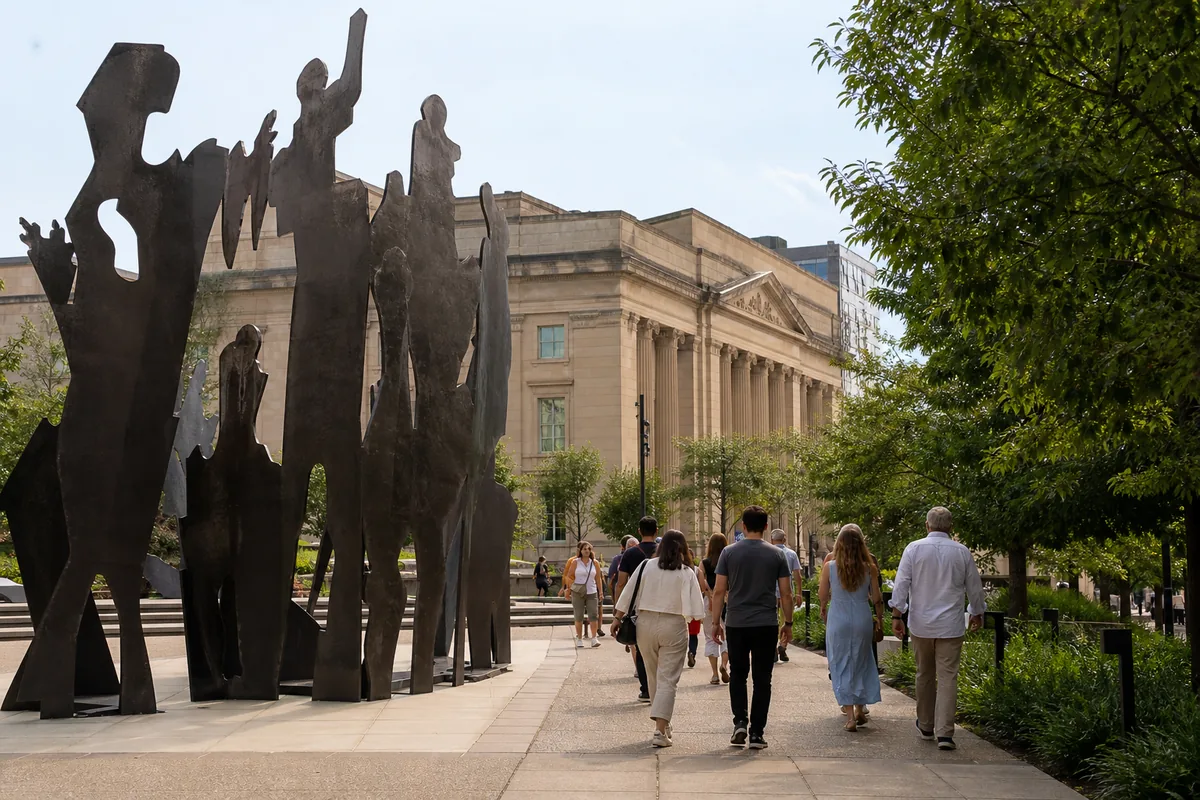
Free Cultural Attractions Beyond Museums
Free museum days get even better when you weave in the civic buildings, libraries, universities, and community stages that shape a city’s daily life. They are open, curious spaces where you can listen, observe, and participate—often without tickets or lines.
Build the Cluster
- Pick a theme. Maybe it’s “civic icons,” “student energy,” or “urban greenways.” A lens keeps the day cohesive.
- Map in layers. Drop pins for libraries, courthouses, campuses, historic markets, and street-art corridors near your must-see museums.
- Watch distance. Keep everything within roughly a mile so you can move on foot and notice serendipitous details between stops.
Sequence for Demand
- Anchor around timed events. City council sessions, open court hearings, or campus gallery receptions often have fixed start times. Build the rest of your day around those windows.
- Trade indoor/outdoor moments. Follow a quiet reading room with a lively plaza performance, then duck into a cool atrium. This rhythm keeps energy balanced.
- Leave flex slots. Street performers, impromptu marches, or chalk festivals appear without notice—give yourself at least one “wild card” hour to follow what you discover.
Tools
- City calendars. Municipal and county websites publish agendas for hearings, proclamations, and community award ceremonies that welcome observers.
- University event feeds. Most campuses list exhibitions, public lectures, and maker fairs that are free if you sign in with a visitor badge.
- Library newsletters. They flag author talks, genealogy labs, zine swaps, and kids’ art hours—perfect inserts between museums.
- Local transit apps. Knowing the closest bus or tram stop lets you extend the cluster if rain or accessibility needs arise.
Why This Matters
- Deeper context. You hear how residents debate policy, honor tradition, and celebrate milestones.
- Budget resilience. If a museum temporarily charges for a blockbuster exhibition, you already have backup free experiences in the vicinity.
- Community respect. Showing up for public forums or campus recitals supports the people keeping culture alive.
Playbook
- Research: Screenshot the weekly library/city/campus calendars.
- Shortlist: Choose two “always open” sites (e.g., city hall rotunda, sculpture park) and two “time-specific” events (e.g., jazz rehearsal, moot-court session).
- Prepare: Check ID requirements, dress codes, and security rules; some courts, archives, or legislative chambers have lockers or metal detectors.
- Document: Take note of names, placards, and artist statements; they become conversation starters at your next museum stop.
Accessibility & Comfort
- Libraries and civic buildings are usually ADA-compliant and include restrooms, bottle fillers, and seating. Use them as reset points.
- Pack a lightweight layer—courtrooms and archives run cold to protect materials.
- Quiet zones mean whisper-level voices and silenced phones; review etiquette signs when you enter.
Example Day
| Time | Experience | Why it Works |
|---|---|---|
| 09:00 | Guided tour of a city hall mural collection | Zero-cost art history with local insight |
| 10:30 | Archive reading room peek | Short dwell time, climate-controlled |
| 12:00 | Outdoor food market + buskers | Sensory break + lunch |
| 13:30 | University design gallery opening | Student perspective, often uncrowded |
| 15:00 | Public library maker lab demo | Hands-on pause before evening museum |
Advanced Tips
- Pair with audio. Download public-art audio walks or podcast episodes about the district you’re exploring.
- Track legal calendars. In some countries, supreme or constitutional courts offer scheduled oral arguments that are open to the public—an intense civic lesson.
- Volunteer drop-ins. Community gardens, neighborhood cleanups, and cultural center shifts sometimes accept day-of volunteers if you bring ID.
FAQ
- Can I take photos inside civic buildings? Usually yes in lobbies and rotundas, but always ask before photographing security checkpoints or active courtrooms.
- Do I need tickets for campus shows? Many are first-come, first-served. Arrive early and bring a government ID for building access.
- What should I wear? Smart-casual outfits work everywhere; some chambers prohibit hats, sleeveless shirts, or large bags.
- Are these spaces safe at night? Stick to well-lit areas, travel with a friend, and follow local guidance—universities and city centers often have security escorts if needed.