

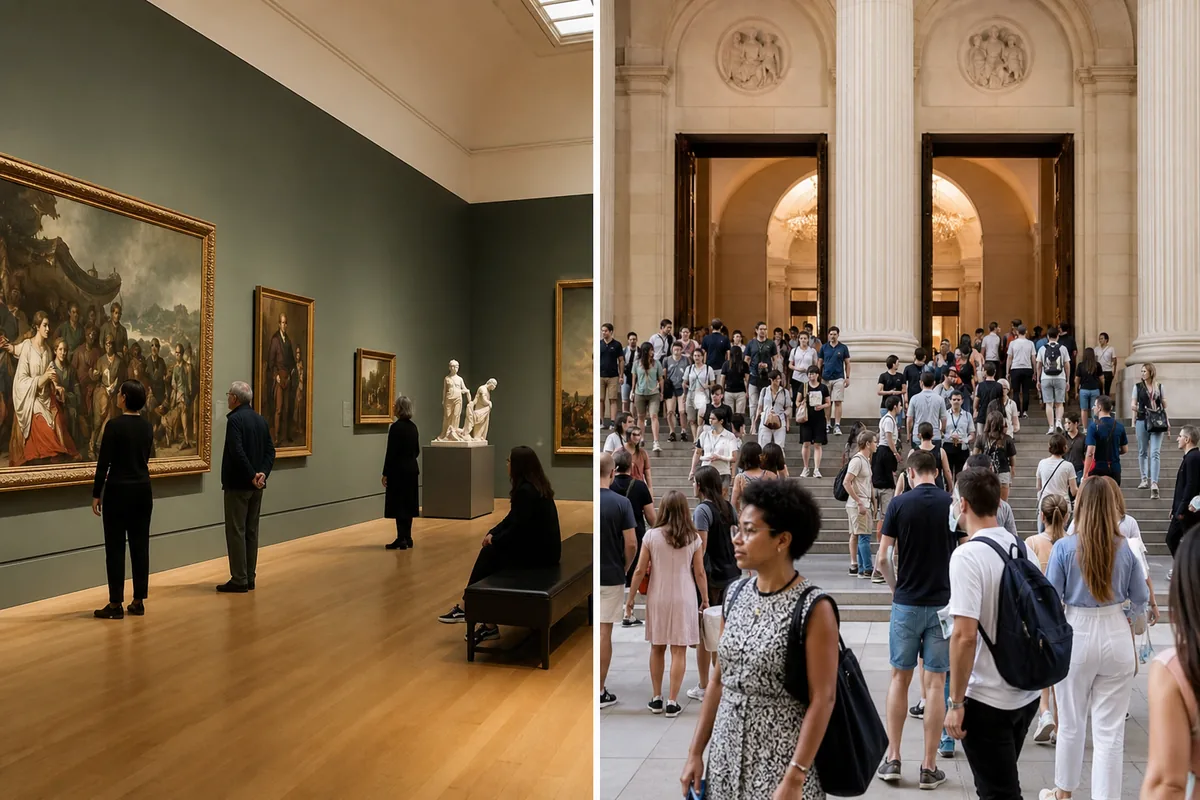
Weekend vs. Weekday Museum Strategies: A Practical Guide for Travelers, Students, and Families
Museums are gateways to culture, history, and art, but the experience can vary dramatically depending on the day you visit. A crowded Saturday can feel like a battle for space, while a quiet Tuesday might offer a serene, contemplative journey. This guide provides a clear, strategic framework to help you plan your museum visits, turning potential stress into a rewarding cultural adventure. We’ll dissect the unique challenges and opportunities of weekends and weekdays, offering actionable plans for different visitor profiles.
Build the Cluster
The first step in effective museum route planning is to think in groups, not single destinations. Instead of fixating on one major institution, research which museums are located near each other. Most cities have natural city museum clusters—districts where several museums, galleries, and free cultural attractions are within a short walk.
Start by identifying your “anchor” museum—the one you most want to see. Then, map out what’s nearby. Is there a renowned art museum across from a natural history museum? Is a small, niche gallery tucked behind a major science center? Clustering allows for efficient museum hopping, creating a flexible itinerary where you can pivot based on crowd levels, energy, or unexpected discoveries. This approach is especially valuable on weekends, providing built-in alternatives if your primary target is overwhelmingly busy.
Sequence for Demand
Your arrival order matters. The golden rule: visit the most popular, “must-see” attraction first or last, but never in the middle of the day when crowds peak.
- Weekday Strategy: Take advantage of generally lighter crowds. You can often start with your top choice mid-morning after the initial opening rush subsides. The flow is more forgiving.
- Weekend & Holiday Strategy: This requires military precision. Be at the door of your most coveted museum at opening time. The first 60-90 minutes are often the quietest. Alternatively, consider a late-afternoon entry if the museum has extended hours; many tourists clear out by 3 PM. Your free museum itinerary for a Saturday should place paid, blockbuster exhibitions at the poles of your day, filling the middle with less-demanding stops.
Tools
Modern tools are indispensable for executing these strategies. Use them to move from planning to action.
- Museum Websites & Apps: Always check the official source for the definitive hours, ticket prices, and—crucially—online timed-entry ticket options. Many museums now require or strongly recommend these, effectively capping crowds.
- Mapping Applications (Google Maps, Apple Maps): Use the “Saved” or “Favorites” function to drop pins on all museums in your cluster. This visualizes walking distances and helps you create a logical walking museum route.
- Crowd-Sourced Schedules (Google Business “Popular Times”): This feature is a secret weapon. It shows historical foot traffic data by hour and day, allowing you to predict the quietest windows.
- City Tourism Passes: Evaluate if a pass offering entry to multiple attractions makes financial and logistical sense for your cluster. It can save time at ticket counters.
Why This Matters
Beyond avoiding lines, a strategic approach fundamentally enhances the quality of your visit. It’s about agency. Crowds can create sensory overload, making it difficult to engage deeply with exhibits. A well-planned visit reduces decision fatigue (“What do we do next?”), conserves physical energy, and maximizes your intellectual and emotional ROI. For families, it can mean the difference between a meltdown and a magical day of discovery. For students and travelers, it means transforming a checklist item into a meaningful, memorable experience.
Playbook
Here is your distilled action plan for each type of day.
Weekday Playbook (Tuesday-Thursday are typically best):
- Mindset: Leisurely, deep exploration.
- Tickets: May often be purchased day-of, but still check for special exhibitions.
- Timing: Arrive mid-morning (10:30 AM) or after lunch (1:30 PM) to avoid the slim opening rush.
- Pace: You can afford to linger. Take that audio guide, sit and sketch, revisit favorite rooms.
- Flexibility: High. You can more easily change your plan a museum day on the fly.
Weekend Playbook (Saturday, Sunday, Holidays):
- Mindset: Efficient, tactical, priority-focused.
- Tickets: Always book timed-entry tickets online in advance.
- Timing: “First in” or “last in.” Aim for opening sharp or the final 2-3 hours.
- Pace: Be brisk in popular permanent galleries. Seek out lesser-visited wings for respite.
- Flexibility: Lower. Have a firm Plan A and a clear Plan B from your cluster.
User Scenarios
- The Solo Traveler/Student (Weekday): Perfect for deep dives. Use the quiet to attend a curator talk, spend an hour in a single gallery, or use the museum cafe as a reading spot. Your cluster can be ambitious—4-5 stops are feasible.
- The Family with Young Kids (Weekend): Prioritize one, maybe two institutions. Use the “first in” strategy for the children’s museum or interactive science center. Pre-identify bathrooms, cafés, and interactive exhibits. A walking museum route between two nearby sites can serve as a needed energy-burning break.
- The Couple or Friend Group (Either): On a weekday, enjoy a long lunch at the museum restaurant. On a weekend, book a special evening tour or members-only hour if available. Use the cluster to mix art (one museum) with history (another) to cater to varied interests.
Common Mistakes
- Winging It on a Weekend: Assuming you can buy a ticket at the door for a major museum on a Saturday is the top error, leading to wasted time or disappointment.
- Over-Clustering: Trying to hit five major museums in one day is unsustainable. Quality over quantity. Two to three substantive visits is a full day.
- Ignoring Your Own Rhythm: Don’t force a 9 AM start if you’re not morning people. A late-start weekend strategy might work better for you.
- Skipping the “Little” Museum: The small, quirky museum in your cluster often has fewer crowds and more character, providing a delightful contrast to the blockbuster experience.
- Forgetting Fuel: Not scheduling snack/meal breaks leads to fatigue and irritability, especially in groups.
Accessibility & Comfort
A good strategy is an accessible strategy. Comfort is non-negotiable for enjoyment.
- Footwear: This is not the day for new shoes. Prioritize support over style.
- Bag: Use a small, lightweight bag. Large backpacks are often cumbersome and may need to be checked.
- Pacing: Museums are marathons. Schedule seated breaks every 60-90 minutes. Use benches inside galleries.
- Hydration & Snacks: Carry a water bottle. Know the café locations for a proper break.
- Sensory Needs: Research ahead. Many museums offer “quiet hours,” sensory maps, or noise-canceling headphones for checkout. Weekday mornings are generally calmer, with lower stimuli.
Example Day
Scenario: A Saturday Cultural Blitz in a Major City Cluster
- 8:45 AM: Arrive at pre-booked timed entry for the city’s premier Art Museum (Anchor 1).
- 8:55 - 10:45 AM: Enjoy the iconic permanent collection in relative peace. Skip the crowded special exhibit.
- 11:00 AM: Short walk to a nearby Contemporary Art Gallery (Anchor 2). Pre-booked entry for 11 AM.
- 12:30 PM: Lunch at a café near the gallery, away from the main museum district crowds.
- 1:45 PM: Walk through a historic public square (a free cultural attraction) to digest.
- 2:30 PM: Visit a small, niche History Museum (part of the cluster). Pay at the door; crowds are light.
- 4:00 PM: Final stop: the free public sculpture garden. A peaceful, open-air end to the day.
Advanced Tips
- Membership Magic: If visiting a city repeatedly, a membership to one major museum often includes reciprocal benefits (free or discounted entry) at museums in other cities, and provides member-only entry times.
- The “Late-Night” Advantage: Many large museums have one evening a week with extended hours. These are typically adult-focused, less crowded, and have a vibrant atmosphere.
- Off-Season Weekends: A weekend in a city during its tourist off-season (e.g., a northern city in February) can offer a hybrid experience—weekend vibe with weekday crowd levels.
- Leverage the Lunch Lull: From 12:30 PM to 1:30 PM, many galleries empty as visitors seek food. Use this time to see a popular exhibit.
FAQ
Q: Is it really worth visiting a museum on a weekend? A: Absolutely, if you plan strategically. The energy can be vibrant. The key is accepting you won’t have the place to yourself and using advance tickets and smart timing to navigate the crowds.
Q: What is the single worst day to visit a museum? A: In most cities, it’s a rainy Saturday or a Monday when many other attractions (like shops or smaller museums) are closed, funneling everyone into the few open major institutions.
Q: Are free admission days a good idea? A: They are excellent for budget-conscious visitors but are often the most crowded. Treat them like a peak weekend day: arrive at opening, target specific exhibits, and expect company. They are a cornerstone of many a free museum itinerary.
Q: How do I handle a museum that’s part of a large, crowded cluster? A: Identify its “back door” or less famous collections. Often, the most famous wing (e.g., “19th-Century Paintings”) is packed, while another wing (e.g., “Decorative Arts”) is serene and fascinating. Start there.
Further Reading
- Bluelist (by Atlas Obscura): For discovering unique and offbeat museums worldwide.
- Google Arts & Culture “Explore” Page: A superb tool for virtual previews of museum collections and floor plans.
- The Cultured Grid: Offers thoughtful reviews and practical tips for museum-going in major global cities.
- Local Subreddits & Forums: Search for “[City Name] tourism” or “travel” for recent, crowd-sourced advice on current crowd patterns and hidden gems.