

The Art of the Queue: A Traveler’s Guide
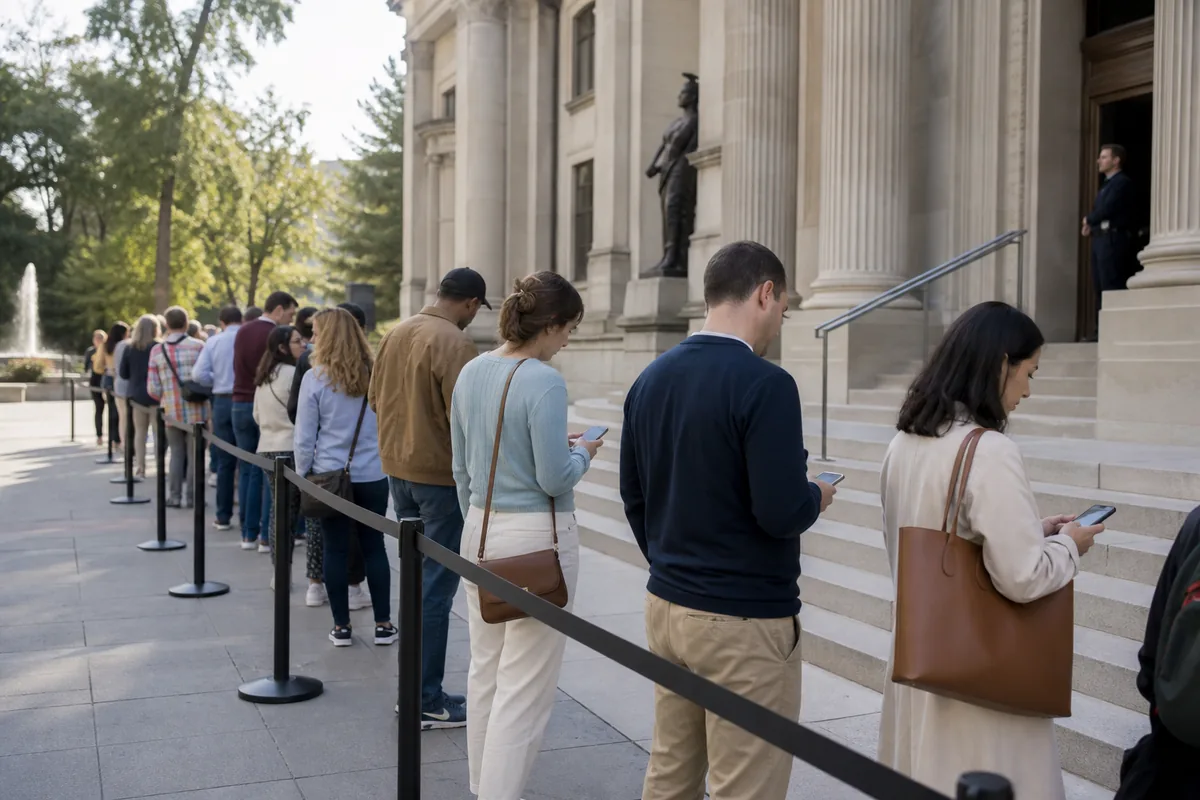
Sold-out slots and sidewalk queues siphon the joy out of a free museum day. With a little planning you can move through high-demand spaces calmly, even during peak travel weeks. Use these tactics before, during, and after your visits to keep energy focused on the art instead of the rope line.
Build the Cluster
- Stick to tight geography. Plot museums within a 10–15 minute walk of one another. When a line at your first-choice stop balloons, you can pivot to Plan B without burning time on transit.
- Pair anchors with relief valves. Match every blockbuster venue with a nearby lower-demand option (community galleries, archives, sculpture courtyards). This keeps the day moving if an anchor becomes inaccessible.
- Know the entrances. Many museums have side doors for members, school groups, or timed-entry guests. Read the visit page so you know exactly where to queue and which ID you must show.
Sequence for Demand
- First or last. Arrive 20 minutes before opening—or two hours before closing—for headline museums. Crowds are thinnest and staff are fresh.
- Flip the script. If the standard flow begins with the famous gallery, start upstairs or in a lesser-known wing. You’ll enjoy empty rooms while others wait for the blockbuster corridor.
- Use the lunch lull. Schedule a quick snack so you can explore between 11:30 a.m. and 1:30 p.m. while much of the crowd is eating.
- Watch the calendar. School holidays, First Fridays, and city festivals create sudden surges. Shift your visit to adjacent days, or book the earliest available timed slot when you cannot avoid the surge date.
Tools
- Official apps and visit pages. These list the current timed-entry windows, ID policies, coat-check rules, and any construction closures.
- Popular-times graphs. Google Maps and other aggregators surface hourly footfall trends. Overlay those graphs with the museum’s schedule to pick a truly quiet window.
- Reminder stack. Save PDFs of your timed tickets, membership cards, and confirmation emails offline. Nothing slows a line like digging through inboxes at the scanner.
- Portable essentials. Minimal bags, collapsible water bottles, and digital guidebooks keep you nimble when bag checks or lockers are required.
Why This Matters
- Energy management. Short lines mean you arrive in the gallery with attention to spare.
- Group harmony. Families and class trips avoid meltdowns when everyone knows “what’s next” if a plan shifts.
- Trip value. When you skip unnecessary queues you can fit another free venue, coffee with a friend, or a neighborhood walk into the same day.
Playbook
- Two weeks out: Map clusters, bookmark visit pages, and subscribe to alerts for the busiest museums.
- Three days out: Reconfirm opening hours, weather, and transit alerts. Lock any remaining timed tickets.
- Night before: Screenshot QR codes, pack light layers, and sketch a cue card with the day’s order.
- Day of: Arrive early, monitor lines as you exit each venue, and update your backup order in a notes app.
Common Mistakes
- Over-scheduling timed entries. You lose flexibility when every hour is locked to a barcode.
- Ignoring neighborhood transit. Street closures, parades, or marathon routes can block the faster entrance.
- Skipping the “Plan C.” Always know one additional nearby site (library, public art walk, historic church) so the day still feels special if everything else runs long.
Accessibility & Comfort
- Check whether timed-entry lines are shaded and whether seating is available. Bring a compact umbrella or cooling towel for extreme weather queues.
- For travelers with mobility needs, contact the museum in advance; many offer alternate entrances or early access for those who cannot stand for long periods.
Example Day
- 09:30 — Arrive at the anchor art museum with a pre-booked 10:00 slot.
- 11:15 — Walk five minutes to a community photography center as a crowd buffer.
- 12:30 — Lunch break plus hydration.
- 13:15 — Smaller science gallery with no timed entry.
- 15:00 — Optional return to the anchor for a favorite wing using re-entry privileges.
Advanced Tips
- Shadow the weather. Extreme heat or rain pushes more visitors indoors. Swap your indoor/outdoor order to stay comfortable and reduce competition for shelter.
- Share queue intel. Traveling with friends? Use group chats to report current wait times while you divide and conquer.
- Use civic data. Some cities publish live occupancy dashboards for major museums. Bookmark them for real-time rerouting.
FAQ
- Do I still need tickets for “free” nights? Often yes—popular free evenings still require zero-cost reservations to manage capacity.
- How early is early enough? For headline exhibits, 30 minutes before opening is the sweet spot. For smaller museums, 10 minutes works.
- Are late entries strict? Most venues offer a grace period (15–30 minutes), but don’t rely on it during special exhibitions.
- What if I miss my slot? Ask a floor manager politely—many will reissue a later time if capacity allows.