

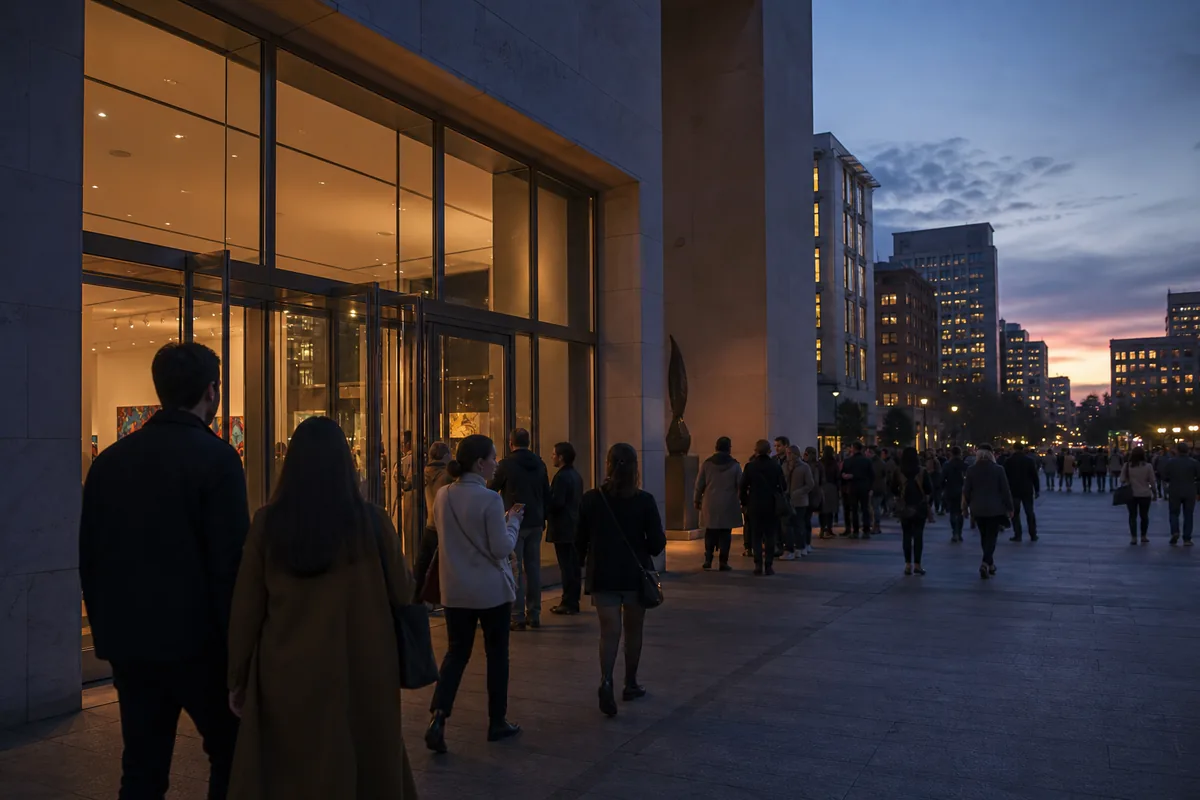
Free Museum Nights After Work: A Complete Guide to Urban Cultural Exploration
After a long day, the idea of more “enrichment” can feel like a chore. But what if you could trade the usual routine for an adventure that’s intellectually stimulating, socially engaging, and completely free? Enter the world of free museum nights. These weekly or monthly events, offered by many major city museums, unlock world-class collections after standard closing hours. They transform cultural institutions from formal daytime destinations into vibrant, accessible social hubs. This guide is your blueprint for turning these opportunities into a seamless and rewarding part of your life, whether you’re a traveler seeking authentic local experiences, a student on a budget, or a family looking for an inspiring evening out.
Build the Cluster
Your first step is strategic intelligence gathering. Don’t just look for one museum; build a cluster of options. A single city often has multiple institutions with staggered free nights, creating a web of possibilities across your week.
Start with a broad search. Use terms like “free admission [City Name]” or “[City Name] museum free days.” Focus on finding official institutional calendars, not third-party aggregators which can be outdated. Major art, natural history, science, and contemporary art museums are the most common participants. Don’t overlook smaller, niche museums—they often offer a more intimate, crowd-free experience on their free nights.
Map them literally. Once you have 3-5 candidates, plot them on a digital or physical map. This visual exercise reveals a city museum cluster—a geographic concentration of institutions that may be walkable from each other or easily connected by a short transit ride. Understanding this layout is the foundation of efficient museum hopping. Your goal is to move from having one option on a Tuesday to having a curated shortlist of potential free cultural attractions for almost every evening of the week.
Sequence for Demand
Not all free nights are created equal. Their popularity varies dramatically, and your experience will hinge on choosing the right one for your goals. You must sequence your targets based on anticipated demand.
- High-Demand Evenings: These are typically at the flagship museums—the ones everyone knows. They often feature special evening programming like live music, guest lectures, or cocktail bars. Expect crowds, energy, and a social buzz. Go to these when you’re in the mood for atmosphere and don’t mind a bit of a bustle. Pre-registration is often mandatory and slots fill fast.
- Low-Demand Gems: These are your secret weapons. They might be at smaller museums, museums in less central neighborhoods, or on less popular weeknights (e.g., Thursday vs. Friday). The experience is calmer, more contemplative. You can have a room virtually to yourself. This is ideal for deep looking, sketching, or a quiet conversation about the exhibits.
- The “Shoulder” Visit: Consider attending a popular museum’s free night in the final 60-90 minutes. Many attendees come for the opening rush and leave; you can often walk in more easily later and enjoy the space as it empties out.
Tools
A minimalist toolkit prevents frustration and saves time. You don’t need complex apps, just reliable, focused resources.
- Official Museum Websites & Calendars: The single source of truth. Bookmark them. Always double-check here for last-minute changes, registration links, and specific exhibition closures.
- A Dedicated Map App: Use Google Maps, Apple Maps, or Citymapper. Create a saved list titled “Museum Nights.” Pin all your target museums. This allows you to instantly see distances, transit options, and nearby dinner spots.
- A Simple Note-Taking App: Use this to jot down the crucial details: Museum name, free night (e.g., “First Fri, 5-9 PM”), registration requirement (Y/N), and any special notes (“Last entry at 8 PM,” “Coat check is free”).
- Public Transit App: Know the schedule for your last train or bus home. The evening’s magic evaporates quickly when you’re stranded.
Why This Matters
Beyond the obvious financial savings, free museum nights serve a deeper purpose. They democratize access to culture, breaking down the economic and psychological barriers that can make museums feel exclusive. For the after-work crowd, they offer a perfect transitional space—neither the office nor the couch. They provide a structured yet flexible activity that combats the inertia of routine. For travelers, they are a window into how locals interact with their city’s cultural soul, far from the daytime tourist throngs. For students and families, they represent sustainable, high-value enrichment. They reinforce the idea that a museum is not a monument to be checked off a list, but a living resource to be revisited and enjoyed as part of a full life.
Playbook
This is your step-by-step operational guide for a successful free museum night.
- Select & Verify (48 Hours Before): Choose your target from your cluster. Revisit its official website to confirm details. Register if required. Download any digital tickets or save confirmations to your phone’s wallet.
- Logistics Scan (Day Of): Check the weather. Decide on footwear (comfort is non-negotiable). Plan your dinner: a light meal beforehand, or identify eateries near the museum for after. Empty your bag of non-essentials to speed up security.
- Arrival Strategy: Aim to arrive 15-20 minutes after the free period begins. This avoids the initial queue surge. Have your ticket/confirmation ready on your phone, ID accessible.
- In-Museum Protocol: Head straight to the information desk. Grab a physical map. Ask the staff, “What’s one thing I shouldn’t miss tonight?” This often yields a fantastic, crowd-free recommendation. Start on a top floor or in a less famous wing and work your way against the general flow.
- Mindful Engagement: Set a timer for 60-90 minutes. Our attention spans are finite, especially after work. It’s better to have a focused, enjoyable 75 minutes than a grueling three-hour slog. See less, see it better.
User Scenarios
- The Traveler: You have one free Tuesday evening in a new city. You find a modern art museum with a free night and a rooftop sculpture garden. You go for the last 90 minutes, enjoy the city skyline at dusk with the art, and then walk to a recommended local restaurant in a neighborhood you otherwise wouldn’t have seen.
- The Student: Your budget is tight, but you need a break from the library. You and a classmate hit a university-affiliated natural history museum’s free evening. You sketch specimens for an art class, have a deep conversation in a quiet hall, and feel recharged without spending a dime.
- The Family: With young kids, a full-day museum trip is overwhelming. You discover the children’s museum has a “Family Free Night” from 4-7 PM. The after-work timing is perfect. The kids get two hours of hands-on play, you get to engage with them creatively, and you’re home for bedtime routines, having created a special midweek memory.
Common Mistakes
- Winging It: Showing up without checking for registration or holiday closures. Result: denied entry.
- Overambition: Trying to see “everything” in one night or hopping between three crowded museums. Result: burnout and no enjoyment.
- Poor Footwear: Choosing style over comfort on a night that will involve 2-3 miles of standing and walking. Result: sore feet derail the experience.
- Ignoring the Perimeter: Staying only in the main, crowded galleries. The most interesting pieces are often in the smaller side rooms.
- Skipping the Vitals: Not using the restroom upon arrival or ignoring thirst. Museum air is dry. Stay hydrated.
Accessibility & Comfort
A comfortable experience is an accessible one. Call ahead or check the museum’s accessibility webpage for specifics on evening hours: Are all entrances and galleries open? Is assistive listening available for talks? For physical comfort, leverage museum amenities. Use the (usually free) coat check. Don’t carry a heavy bag. Seek out benches—they are strategically placed for a reason; use them to rest and contemplate a single artwork. If crowds are overwhelming, find a designated quiet room or step into a less-populated gallery. The goal is engagement, not endurance.
Example Day
Let’s walk through a hypothetical free museum itinerary for a Thursday.
- 5:00 PM: Finish work. Have a small, energizing snack (yogurt, nuts).
- 5:45 PM: Take transit to the museum district. Listen to a podcast or music to shift mental gears.
- 6:15 PM: Arrive at Museum A (free 6-9 PM, no registration). Grab a map, ask the staff for a hidden gem recommendation.
- 6:30 - 7:45 PM: Execute a walking museum route through the recommended 20th-century photography wing, then the Asian ceramics collection. Spend 10 full minutes with one striking piece.
- 7:50 PM: Visit the gift shop (just browsing is fine) and use the restroom.
- 8:00 PM: Walk 10 minutes to a nearby casual restaurant for a well-earned dinner and a debrief on what you saw.
- 9:15 PM: Head home, feeling culturally satiated and mentally refreshed, having executed a perfect plan a museum day—in just an evening.
Advanced Tips
- Thematic Hopping: In a dense cluster, design an evening around a theme. Visit a modern art museum for surrealism, then walk to a film archive for a related short film screening.
- Off-Season Advantage: Free nights in January or February are often significantly less crowded than those in June or October.
- Member Preview Perk: If you are a member of any museum, check if they have reciprocal “guest passes” or discounts you could use on another institution’s free night for a special paid exhibition.
- Document for Later: Take a single photo of the placard next to an artwork that intrigues you, not the art itself. Later, you can research the artist, turning a brief encounter into deeper learning.
FAQ
Q: Are “free nights” really free? A: Yes, general admission is typically waived. However, there may be charges for special ticketed exhibitions, some evening events, or parking. Always check the details.
Q: Do I need to be a resident of the city? A: Almost never. These programs are generally open to all. Some very local community museums might have residency requirements, but major institutions do not.
Q: Can I bring my kids? A: Absolutely, but check the vibe. Some free nights are explicitly family-friendly with activities. Others might be more adult-oriented with bars and dense crowds. The museum’s description will guide you.
Q: Is it rude to go just for the free admission and not spend money? A: Not at all. Your presence is valued. Museums fund these nights through grants and donors specifically to welcome you. If you have a great experience, consider a future membership or donation, but there is no obligation.
Further Reading
To deepen your approach to museum route planning and cultural exploration, consider these resources:
- The Art of Slow Looking by Shari Tishman: A guide to deepening observation and engagement in museums.
- Museum Hack’s Blog: Articles on unconventional ways to experience museums (focus on their general philosophy, not just paid tours).
- Your Local Public Library’s Culture Pass Program: Many libraries offer free or discounted passes to museums, complementing your free night strategy.
- The Podcast *“The Lonely Palette”**: Makes art history accessible and engaging, priming you to get more from your visits.